
Service
Affidavits and Statutory Declarations

Documents We Commonly Assist With
- Affidavits
- Statutory declarations
- Attestation of the authenticity of documents
- Court affidavits: loss of documents, age, marriage, support, travel, lost phone and bank
What This Generally Concerns
An affidavit is generally a written statement of facts made on oath or affirmation. A statutory declaration is a formal written declaration of facts made under the rules that apply to it. Which of the two is suitable, and how it should be worded, depends on the purpose and on who will receive it.
People commonly need such statements to support an application, record a change of circumstances or confirm facts for an institution. The receiving institution decides what it will accept.
Questions Clients Often Ask
- What is the difference between an affidavit and a statutory declaration?
- What details and supporting documents should I bring?
- Do I need to attend in person, and what identification is expected?
- Does the institution receiving it have a required wording or format?
- What are the fees and the next steps?
Things to Confirm
- The purpose of the document and who will receive it
- Any wording or format requirements set by the receiving body
- Whether personal attendance and valid identification are needed
- Fees and likely timing, to be confirmed directly by the business
Examples
 (opens full size in a new tab)
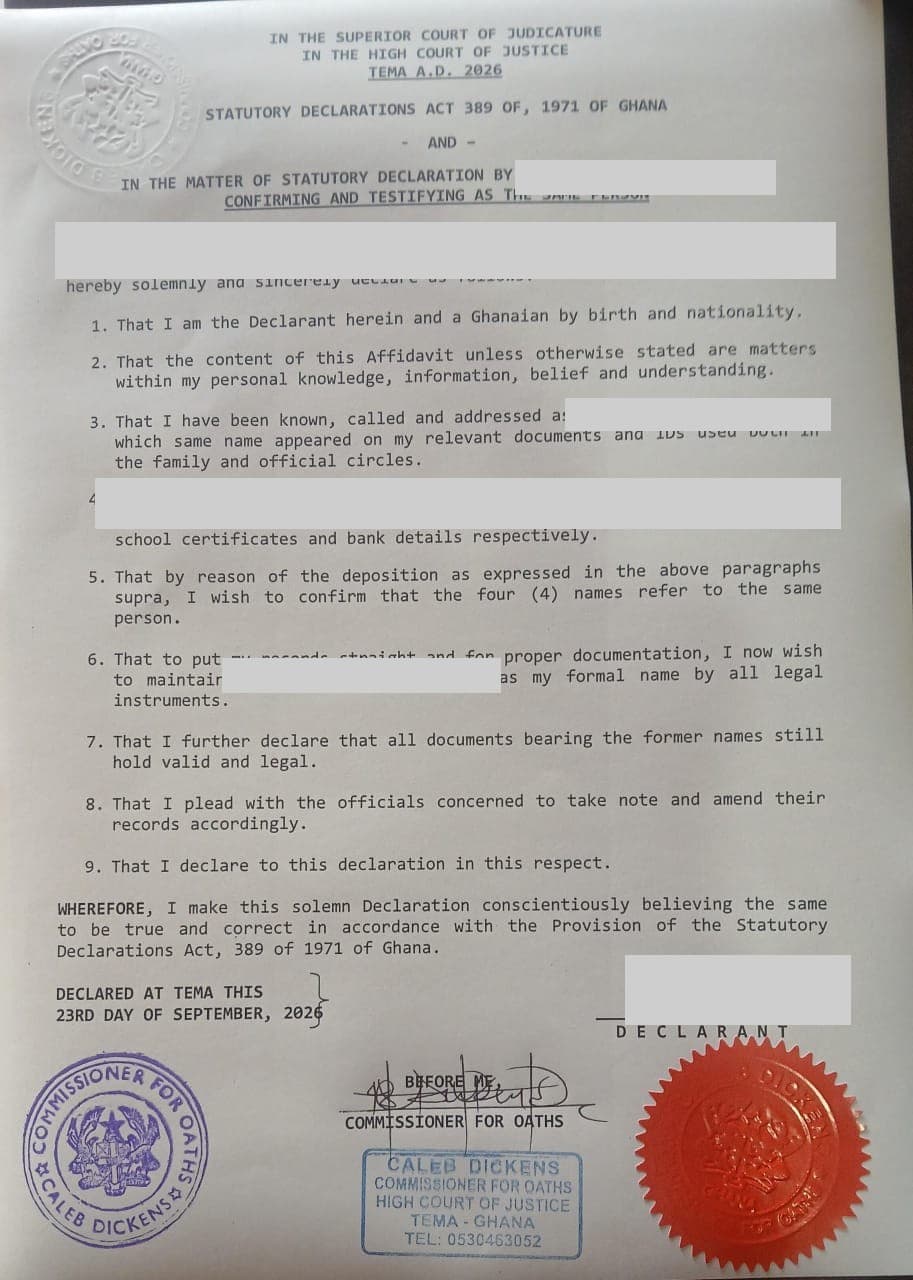
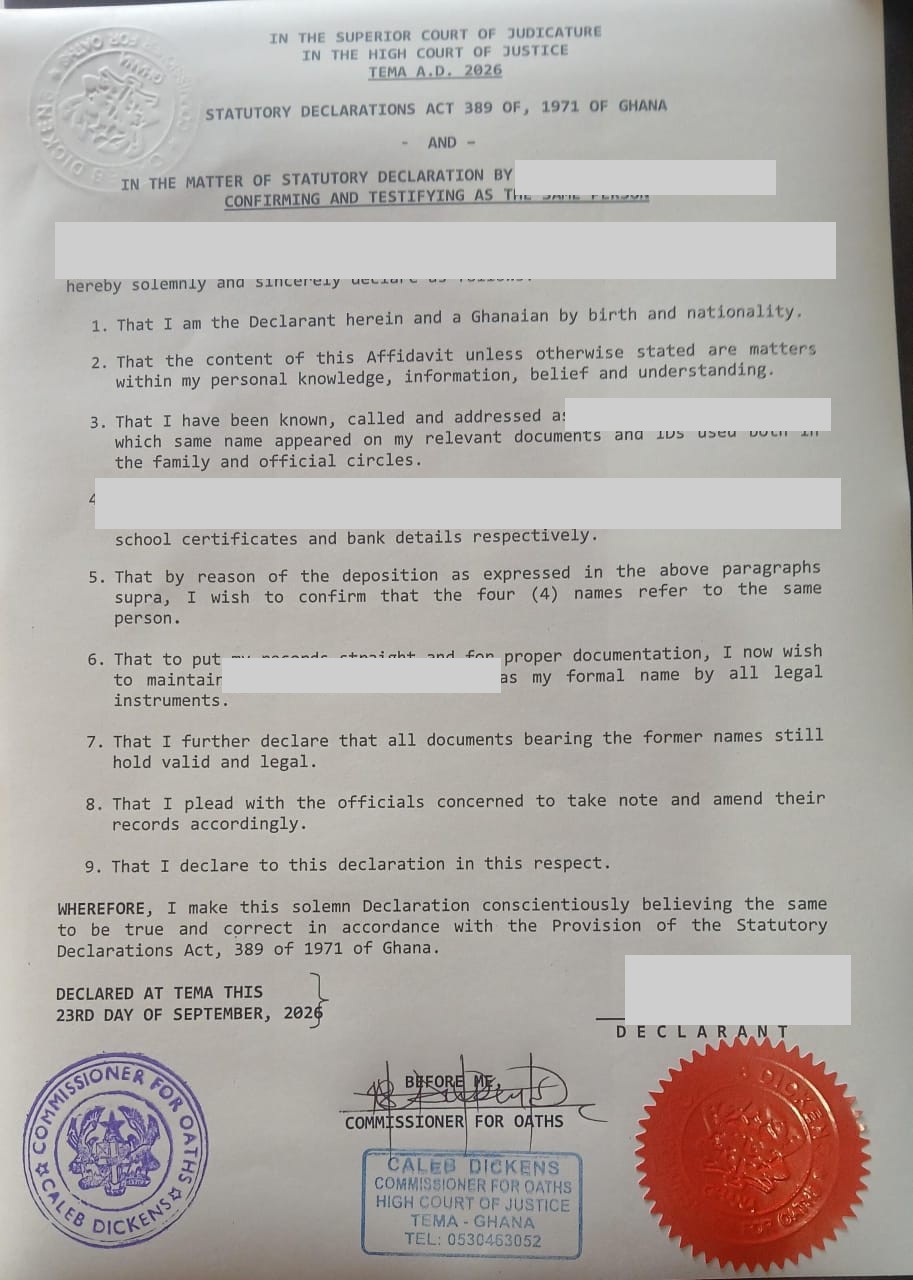
A sample statutory declaration confirming that different names refer to the same person, commissioned by Caleb Dickens. The declarant's personal details are covered.
Whether a document is accepted is decided by the institution that receives it, not by this website or by Redeem.

Start a conversation
Tell Us What You Need to Arrange.
Send a short WhatsApp message describing the document or service. The business will confirm requirements, fees and next steps with you directly.